

 Tiếng Việt
As of July 2026, despite strong growth in the macroeconomy and budget revenue, the number of businesses withdrawing from the market in Vietnam remains high. Facing this paradoxical trend, Prof. Vo Xuan – Dean of the Institute of Business Research (IBR), provided an in-depth analysis indicating that the current economic picture actually reflects a process of rigorous screening and deep restructuring.
Market Screening and Capital Shift Toward High-Quality Enterprises
According to Prof. Vo Xuan Vinh, the high number of market exits does not mean the economy is “shrinking.” Macroeconomic realities show two concurrent flows: the number of newly established and re-entered businesses continues to exceed the number of exits. Notably, the average registered capital of new enterprises rose sharply (reaching VND 12.1 billion, an increase of nearly 40% year-on-year). This demonstrates that investment flows are shifting strongly toward businesses with larger capital capacity and scale.
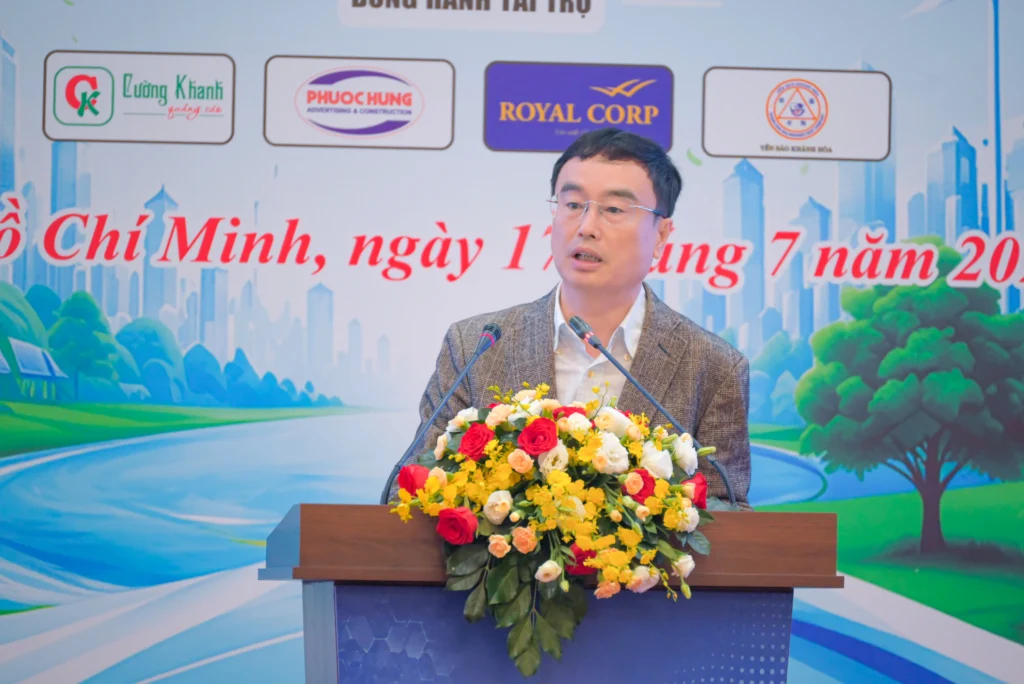
Prof. Vo Xuan Vinh
The Professor analyzed that this restructuring process is a positive sign if large-capital, high-tech, and high-productivity businesses are entering to replace small, low-productivity establishments. However, he also emphasized the underlying quality of growth: “If the exiting businesses are operational entities that generate substantial employment and contribute to tax revenues, while new enterprises bring large capital but create few jobs, we must question the true quality of growth and the health of the private economic sector”.
Creating a Driving Mechanism to Elevate the Entire Business Sector
To protect and promote the intrinsic strength of the private sector, Prof. Vo Xuan Vinh suggested a shift in policy mindset: moving from short-term “rescues” of struggling enterprises toward long-term goals of nurturing large-scale, high-productivity, and internationally competitive businesses. Policies regarding credit, land, taxation, and technology must be synchronized to encourage long-term investment and scale expansion.
In addition, the Professor highlighted a crucial ecosystem-based solution: “A mechanism is needed for major domestic enterprises to lead and pull along an ecosystem of small and medium-sized enterprises (SMEs). As lead enterprises grow, suppliers of raw materials, logistics, supporting industries, services, and technology will also gain opportunities to join the value chain. Consequently, the screening process will not merely substitute business counts, but will also enhance the overall quality of the business sector”.
Article by: Nhu Y – Institute of Business Research

